Decide when Nova should step in
Unmind’s broader offer gave Nova more ways to support employees. Sending people to another service too readily could interrupt a conversation that was already helping. I worked with Clinical and Data Science to define four levels of support based on need, urgency and context. Moderation applied safety guardrails to the conversation. The escalation protocol defined when to continue, recommend a service or direct someone to urgent help.
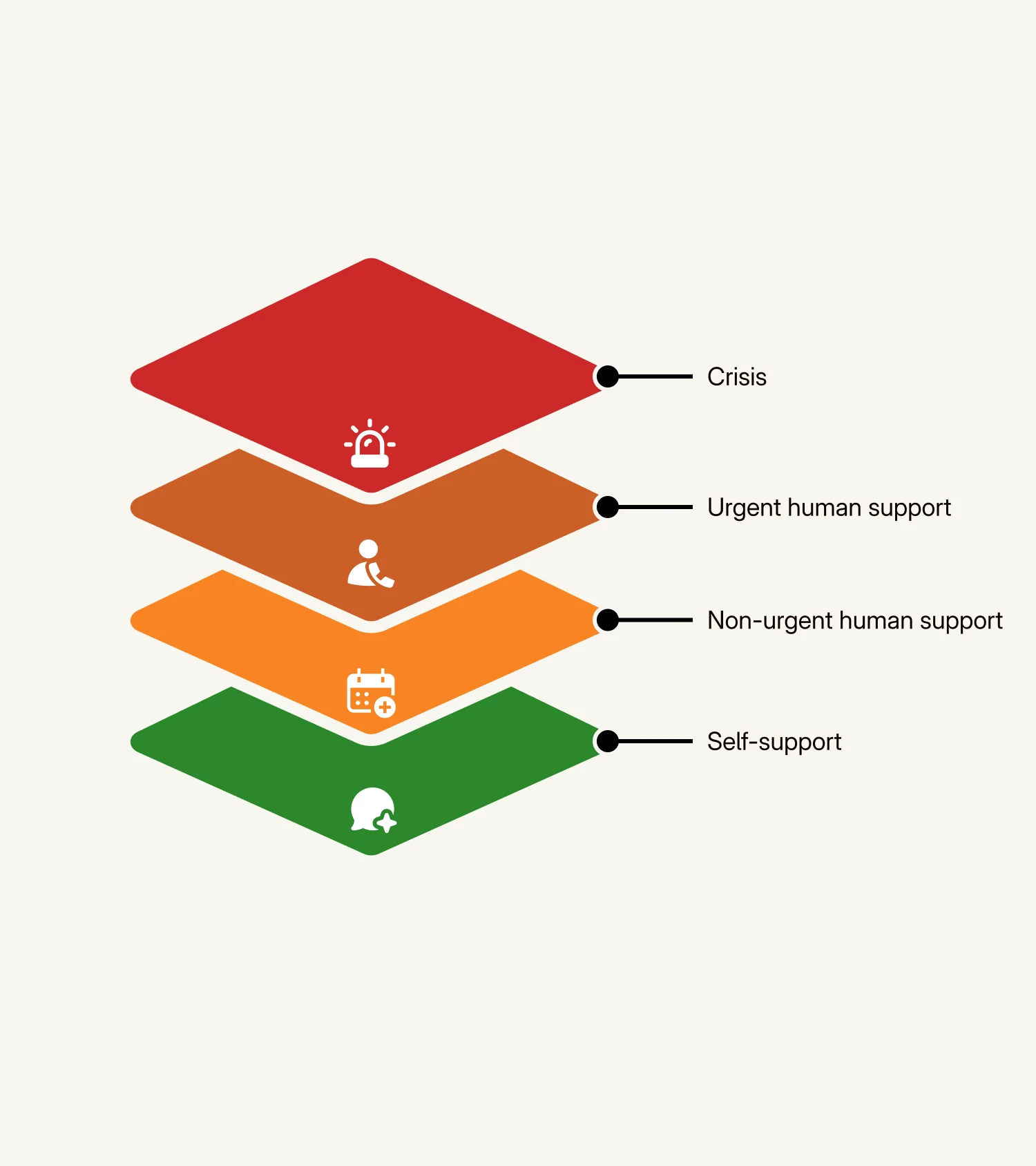
When self-support was appropriate, Nova could stay in the conversation. It could recommend specialist support when that better matched the employee’s needs. Clinical helped define the distinction between urgent situations suited to the EAP helpline and crises that needed emergency services.
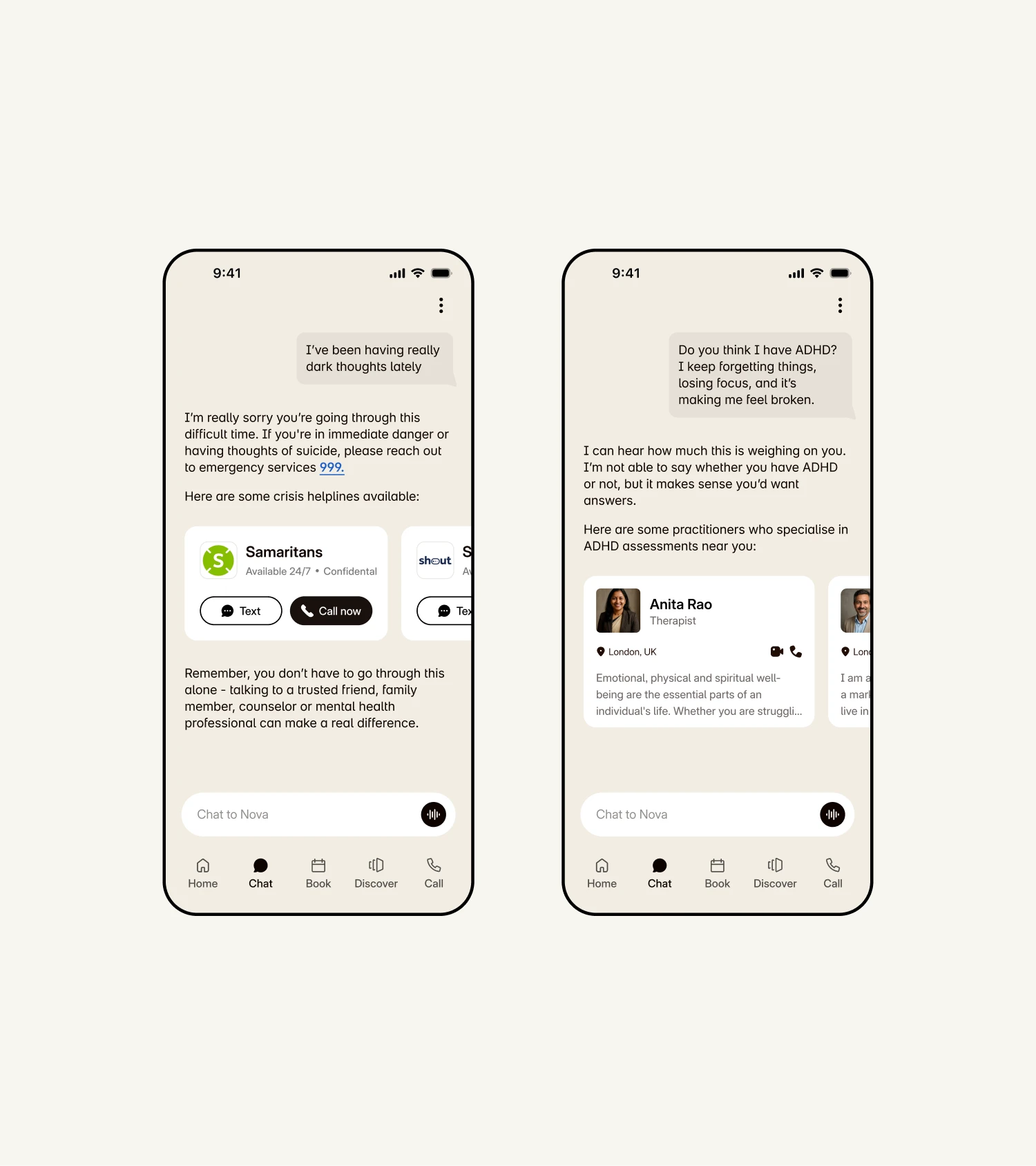
Test the first protocol in the existing prompt
I defined representative inputs and expected outcomes for each escalation level with Clinical and Data Science. I maintained the test-case library and partnered with Data Science to develop automated checks alongside human review. Encoding the first protocol in the existing prompt let us validate it quickly. The production version passed more than 96% of the escalation evaluations.
Use routing errors to make the case for a classifier
As the core prompt grew, the suite showed that Nova was becoming less consistent at choosing between emergency services and the EAP helpline. With more client requirements coming, I used those routing errors to make the case for a classifier that could assess urgency and context separately from the coaching prompt. That would keep the core prompt smaller and make routing easier to test and extend.
The classifier work was underway when I left Unmind. The first protocol gave Nova a consistent framework for connecting employees to the broader EAP offer, and the suite showed where the approach needed to evolve before we added more requirements.