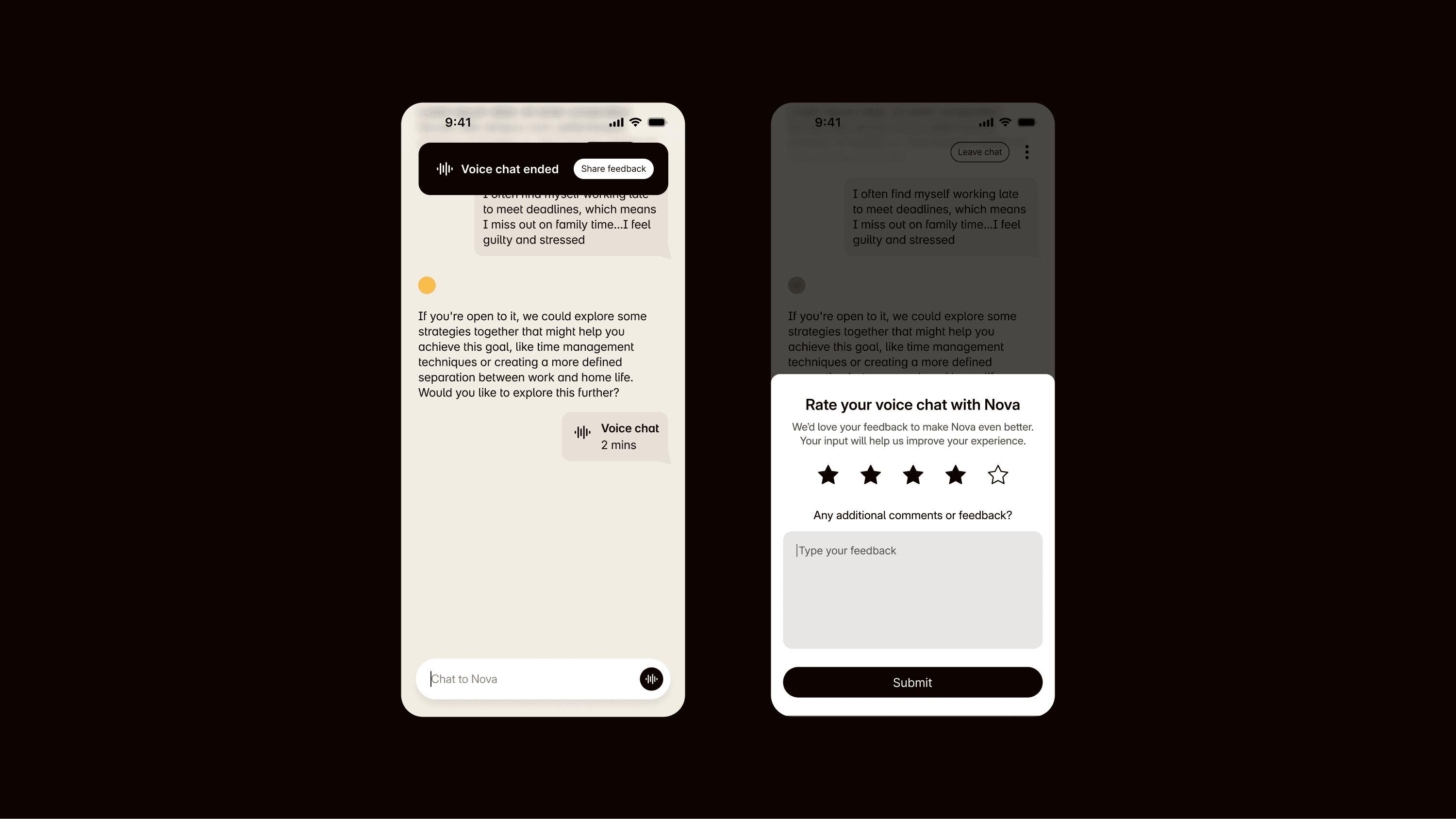
Make the cost of voice visible before committing
I used traffic from Nova’s text experience to estimate likely voice usage. I forecast the extra model costs, including speech generation from Cartesia, so Unmind could weigh the ongoing cost against the potential value of a spoken experience. The forecast gave the business a basis for deciding whether to build voice.
Give people time to finish a thought
The team chose a live, two-way conversation with transcripts. That made turn-taking a product decision: Nova had to be responsive enough to feel present and patient enough to let someone finish a thought.
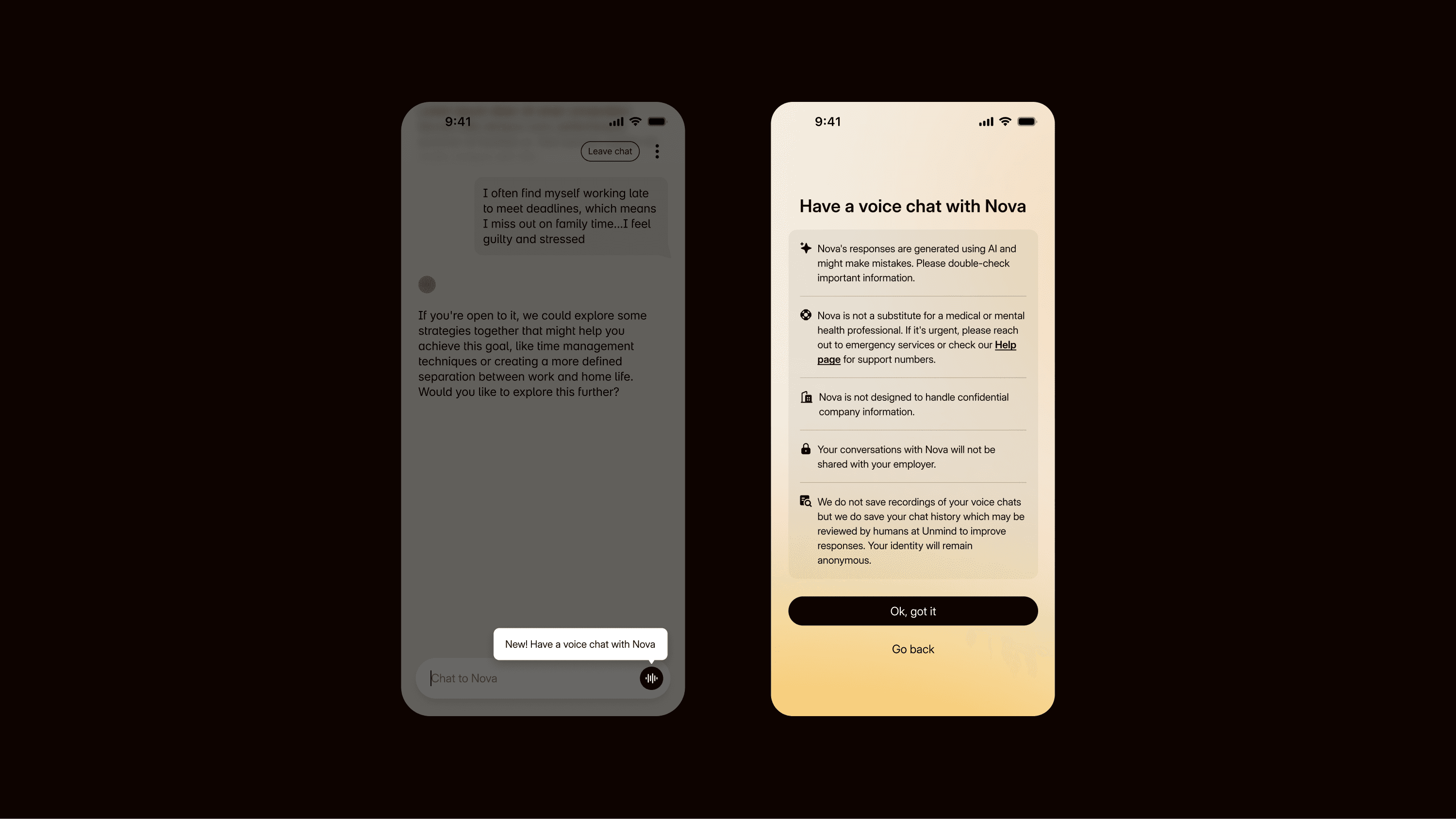
A pause can mean someone is thinking, especially in a sensitive conversation. Responding quickly at every pause could make Nova interrupt. I chose to accept some extra latency so Nova could use the context of what someone said to judge whether they had finished speaking. I tried the experience myself, reviewed feedback and conversations, and worked with Engineering on the trade-off when Nova sometimes waited too long.
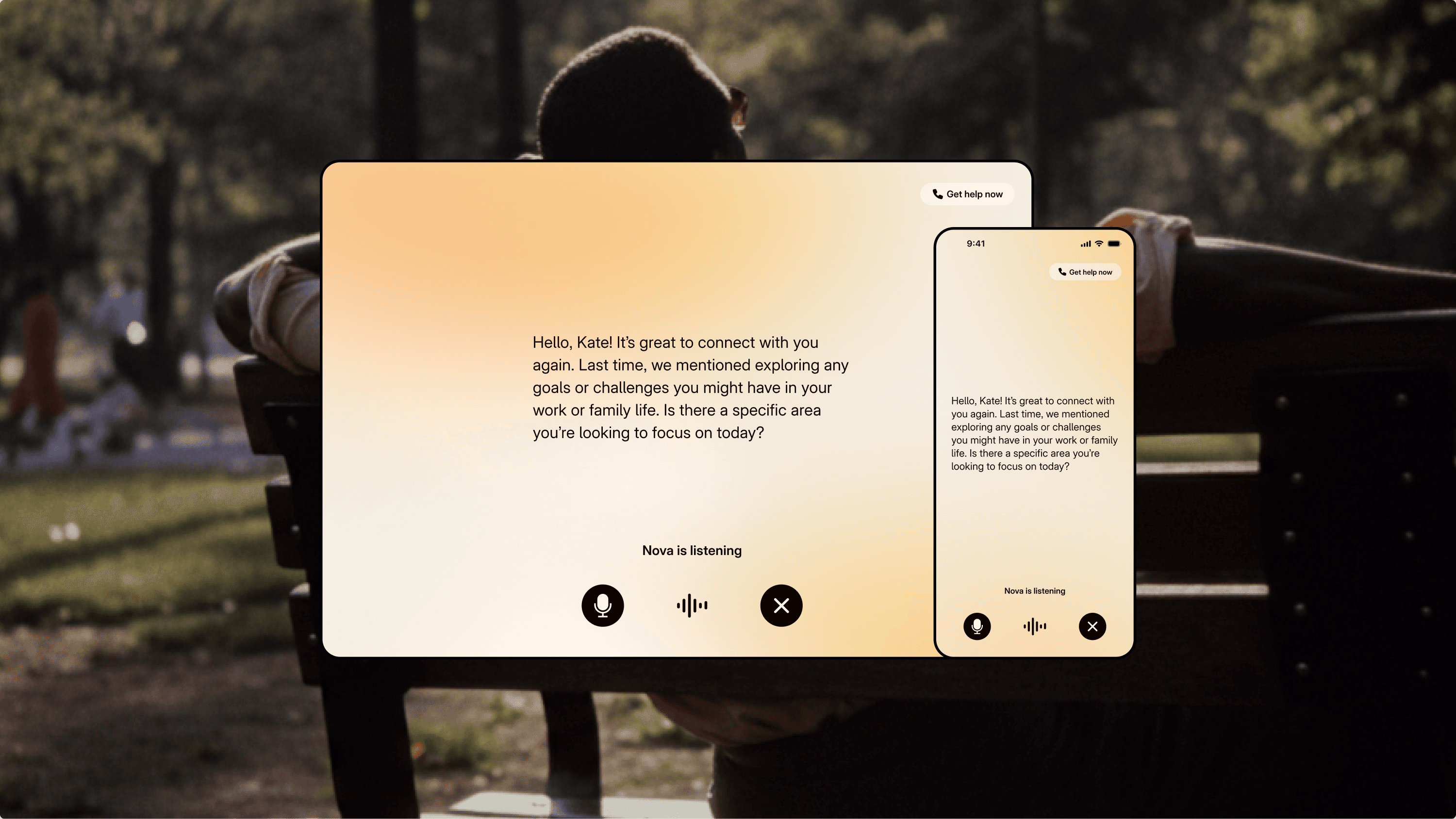
Use conversation quality to judge the investment
We looked at depth as well as duration because a long conversation could reflect either a useful exchange or a frustrating one. Comparing voice with text on both measures helped us understand what the spoken experience was adding.