Turning an engagement goal into a product bet
My hypothesis was that on-demand conversations could help employees with an immediate concern and give them a reason to return to Unmind. If employees found enough value to come back, that could make Unmind more valuable to enterprise clients. I turned that idea into a product strategy and shared goals, then introduced one-day experiments so the team could test assumptions and decide what to build.
Building a focused first release
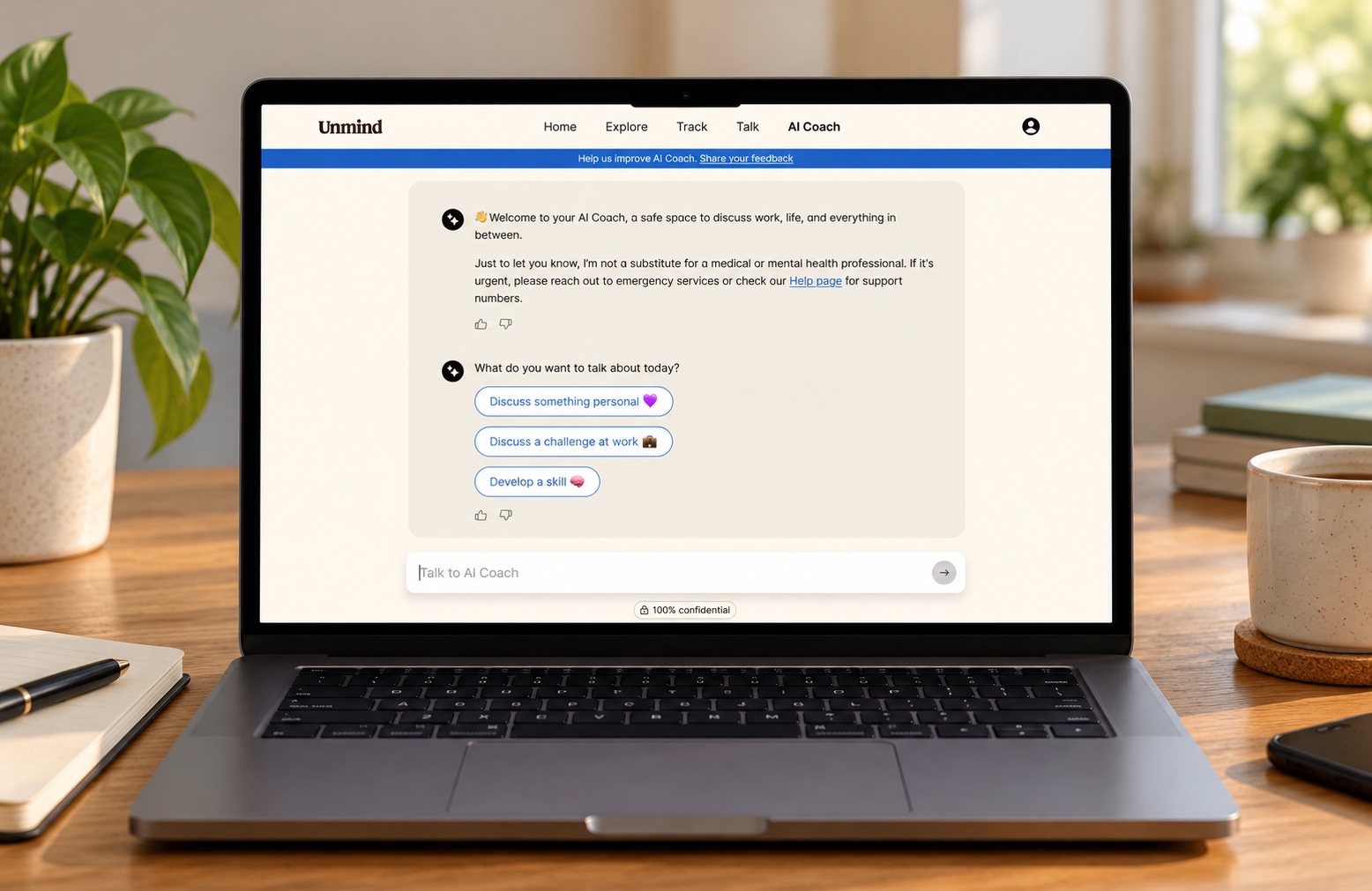
We went from prototype to controlled client beta in five weeks.
I chose web first so we could release and roll back quickly. I deferred memory and recommendations until we saw evidence that the core conversation was useful. That limited upfront investment and let us learn how employees used Nova in a workplace browser.
I worked with Clinical and Engineering to define what had to be true before opening the beta. When safety evaluations identified a need for clearer crisis signposting, I held the release until we had improved the responses. A controlled client beta let us learn from real use once safety, stability and measurement were in place.
Using early evidence to expand access
Internal analysis showed higher measured activity after members sent a Nova message and higher month-on-month retention in Nova-enabled client domains. Those signals gave me a basis for expanding beyond the workplace browser. Mobile would make Nova available to people who could not or preferred not to use it there. We modelled AI costs before launch and monitored actual usage as access expanded.
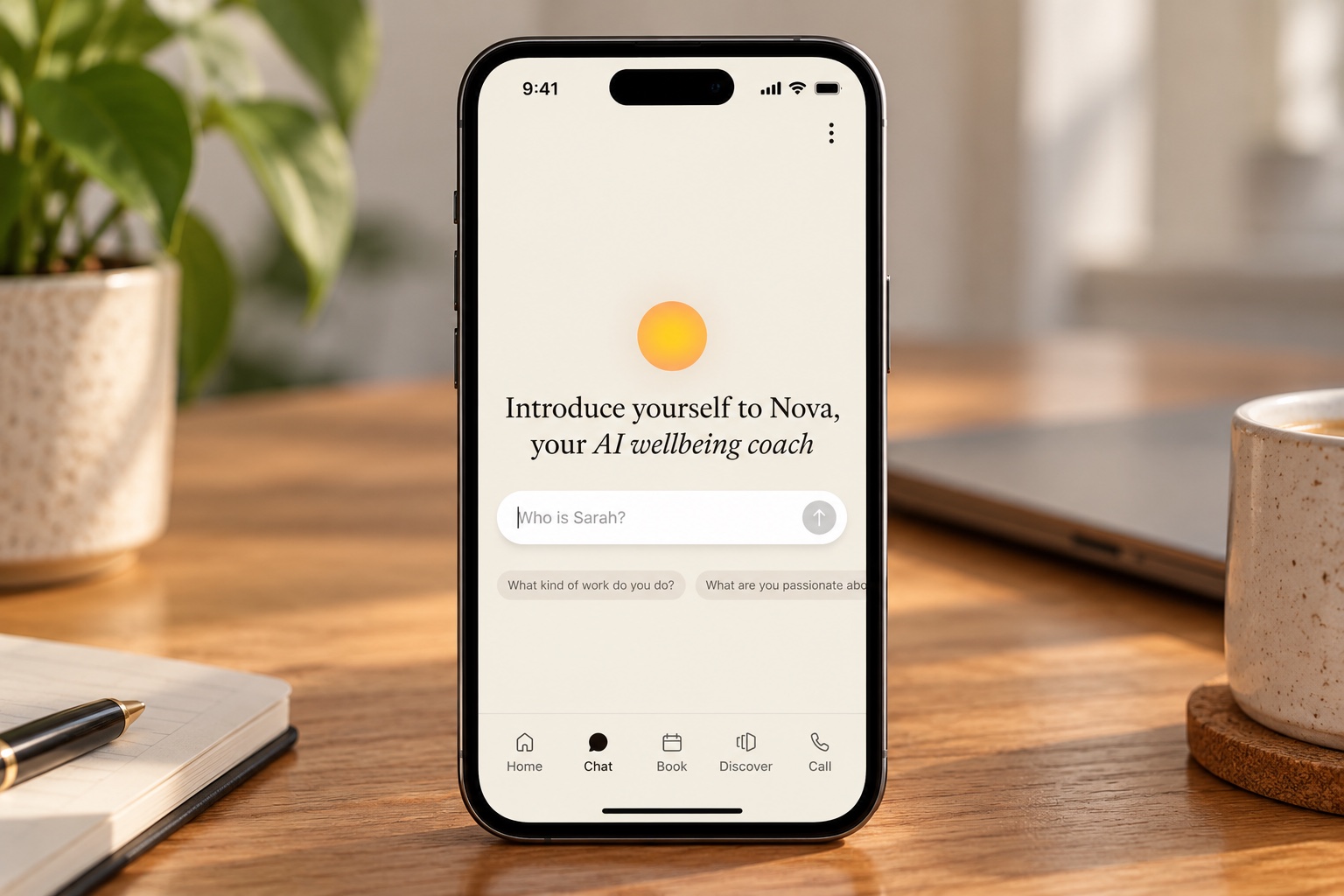
When usage data showed that employees were opening Nova without starting a conversation, I prioritised improving the first-use experience. The introduction of a Welcome Conversation was associated with a 31% higher return rate and 44% more messages per session.
Rolling Nova out to enterprise clients
Nova was part of a new enterprise contract that included a commitment to localise emergency signposting. I prioritised a reusable approach that met the launch commitment and made the support guidance more relevant for other clients and their employees.
By June 2024, Nova was enabled for 91% of eligible client domains.
Evolving Nova beyond launch
Following enterprise rollout, my strategy focused on increasing adoption and repeat engagement by making Nova easier to access and expanding the range of needs it could support.
When usage data showed that employees were opening Nova without starting a conversation, I prioritised improving the first-use experience. Introducing a Welcome Conversation was associated with a 31% higher return rate and 44% more messages per session.
I broadened Nova's capabilities beyond open-ended text conversations, investing in guided exercises and real-time voice to address different user needs and create more reasons to return. Read the case study on shifting investment to guided exercises .
Expanding these capabilities introduced technical challenges. As instructions accumulated, Nova became less reliable at following them. I prioritised investment in a more modular prompt architecture to improve reliability and support further product development.
Throughout this period, I balanced investment in new capabilities with conversational quality, safety and the ongoing cost of serving users. Read the case study on weighing the cost and quality of real-time voice .